Radial balance is one of the most visually compelling ways artists and designers create order, focus, and movement in a composition. It appears when visual elements are arranged around a central point, radiating outward like the spokes of a wheel, the petals of a flower, or ripples spreading across water. Because it is both structured and dynamic, radial balance can make an artwork feel harmonious, ceremonial, energetic, or even hypnotic.
TLDR: Radial balance is a compositional principle in which elements extend from or revolve around a central point. It is commonly seen in mandalas, rose windows, circular mosaics, logos, flowers, and abstract designs. Artists use radial balance to create unity, emphasis, rhythm, and a strong focal point. Key techniques include repetition, symmetry, contrast, circular grids, and controlled variation.
What Is Radial Balance in Art?
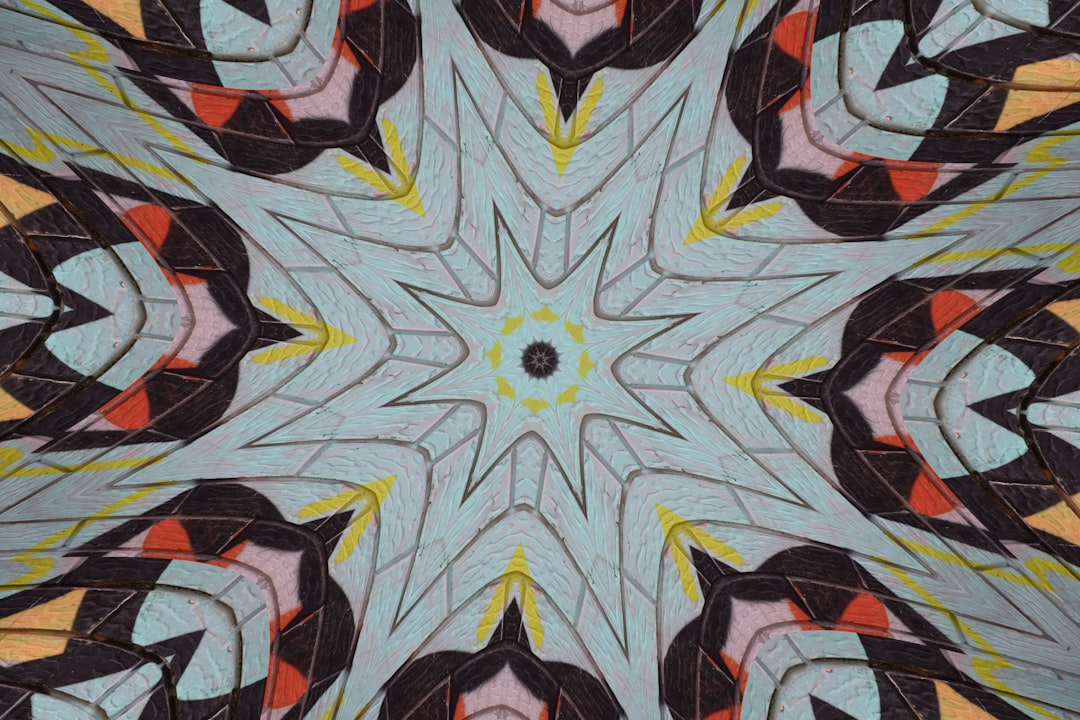
Radial balance refers to a type of visual balance where shapes, colors, lines, textures, or forms are organized around a central axis or point. Unlike symmetrical balance, which typically mirrors elements across a vertical or horizontal line, radial balance expands outward in all directions from the center.
This structure naturally draws the viewer’s eye inward and outward at the same time. The center often becomes the most important visual anchor, while the surrounding elements create rhythm and movement. Radial balance can be precise and mathematical, as in Islamic geometric design, or organic and irregular, as in a sunflower or sea anemone.
In art history, radial compositions have often been associated with spirituality, wholeness, time, and cosmic order. This is because circular arrangements suggest unity and continuity. A circle has no beginning or end, making it a powerful form for representing cycles, infinity, and connection.
Key Characteristics of Radial Balance
Although radial balance can take many forms, most radial artworks share several recognizable features:
- A central focal point: The composition usually begins from a clear center, whether visible or implied.
- Radiating elements: Lines, shapes, colors, or forms extend outward from the middle.
- Repetition: Similar motifs often repeat around the center to create rhythm and unity.
- Circular movement: The viewer’s eye is guided around the artwork in a rotating or expanding path.
- Visual harmony: Even when complex, the composition feels controlled and cohesive.
Radial balance does not always require perfect symmetry. A design can feel radially balanced even if its elements vary in size, color, or placement, as long as the overall visual weight is distributed around the center in a stable way.
Examples of Radial Balance in Art and Design
One of the most familiar examples of radial balance is the mandala. Mandalas appear in Hindu, Buddhist, and other spiritual traditions, where they are used as tools for meditation, teaching, and ritual. Their repeated circular patterns help convey order, contemplation, and the relationship between the individual and the universe.
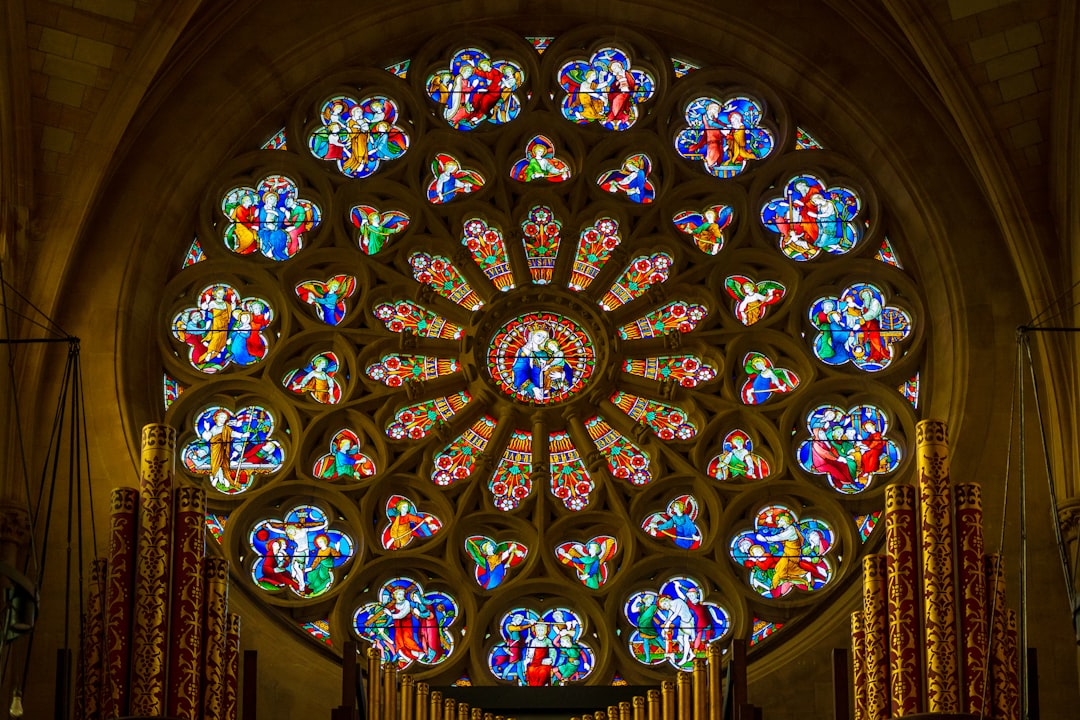
Another important example is the rose window in Gothic cathedrals. These stained-glass windows often feature intricate radial arrangements of biblical scenes, floral motifs, and geometric tracery. The circular structure focuses attention toward the center while allowing light and color to radiate through the architecture.
Radial balance also appears in Islamic geometric art, where complex patterns are built from circles, polygons, and repeated units. These designs often avoid figurative imagery and instead emphasize mathematical precision, infinite repetition, and spiritual abstraction.
In nature, radial balance is common in flowers, starfish, shells, snowflakes, and certain microscopic organisms. Artists frequently draw inspiration from these forms because they combine efficiency, beauty, and structural clarity. A sunflower, for example, uses radial organization in both its petals and seed pattern, creating a natural balance that feels both ordered and alive.
Modern design also uses radial balance in logos, posters, album covers, product packaging, user interfaces, and decorative patterns. A circular logo with evenly distributed elements can appear stable, memorable, and authoritative. In poster design, radial lines or shapes can create dramatic emphasis around a face, object, or message.
Why Artists Use Radial Balance
Artists use radial balance because it offers several strong visual effects. First, it creates emphasis. Since all elements relate to the center, the viewer instinctively looks there. This makes radial balance especially useful when an artist wants to highlight a sacred figure, symbolic object, title, or central idea.
Second, radial balance creates unity. Repeated forms arranged around a center feel connected even when the composition contains many details. This is why radial structures are common in complex decorative art: the central organization prevents the design from becoming chaotic.
Third, radial balance produces movement. The eye may travel from the center outward, from the edges inward, or around the circle. This sense of motion can make a static image feel active and alive.
Finally, radial balance can express symbolic meaning. Circles and radiating forms often suggest sunlight, divinity, growth, cycles, protection, and completeness. For this reason, radial composition is frequently used in religious, ceremonial, and commemorative art.
Techniques for Creating Radial Balance
Creating effective radial balance requires more than placing objects in a circle. The strongest compositions combine structure with thoughtful variation. The following techniques are commonly used by artists and designers:
- Start with a central point. Establish the visual center before adding surrounding elements. This point may be a circle, figure, symbol, empty space, or intersection of lines.
- Use a circular grid. Lightly dividing the space into equal segments can help maintain proportion and spacing. This is especially useful for mandalas, ornaments, and geometric designs.
- Repeat motifs consistently. Repetition creates rhythm. A motif may be a petal shape, triangle, line, dot, figure, or color block.
- Control visual weight. Larger, darker, or more detailed elements feel heavier. Distribute them carefully so one side does not unintentionally overpower the rest.
- Add variation. Perfect repetition can become predictable. Subtle changes in scale, color, texture, or spacing can make the composition more engaging.
- Use contrast at the center. A bright color, strong shape, or detailed form at the center can strengthen the focal point.
- Consider negative space. Empty areas are not wasted space. They help separate forms and allow the radial structure to remain readable.
Radial Balance Compared with Other Types of Balance
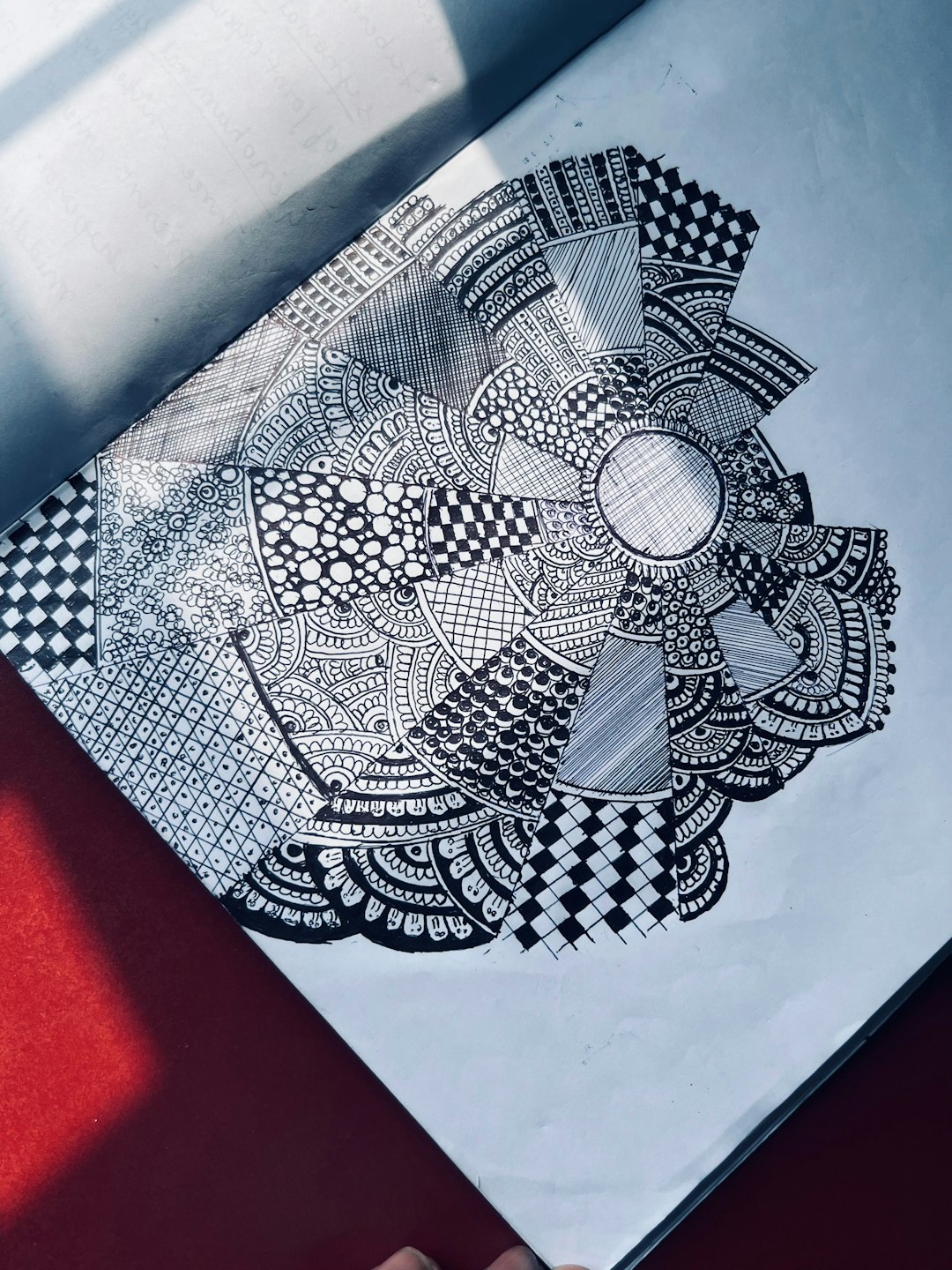
To understand radial balance more clearly, it helps to compare it with other compositional systems. Symmetrical balance mirrors elements across an axis, creating a formal and stable effect. Asymmetrical balance uses unequal elements that still feel visually balanced through contrast, placement, and weight. Radial balance, by contrast, organizes the composition around a center and often creates a circular or spiral movement.
Each type of balance has a different emotional effect. Symmetry can feel calm and traditional. Asymmetry can feel modern, active, or unexpected. Radial balance often feels unified, focused, and expansive. Artists choose among these systems depending on the message and mood they want to communicate.
Common Mistakes to Avoid
One common mistake is making every part of the design equally detailed. If all areas compete for attention, the focal point may become weak. Another mistake is ignoring spacing. Uneven gaps can disrupt radial harmony unless the irregularity is intentional and well controlled.
Color can also create problems. A single intense color placed off-center may pull the viewer’s attention away from the central structure. Similarly, too many unrelated colors can make the design feel fragmented. A limited palette with purposeful accents often produces a more refined result.
Finally, artists should avoid relying only on mechanical repetition. Radial balance is most effective when it combines order with expression. Even highly geometric works benefit from thoughtful decisions about proportion, contrast, and visual rhythm.
Conclusion
Radial balance is a powerful principle that brings structure, focus, and movement to art. From ancient mandalas and cathedral windows to contemporary logos and abstract compositions, it continues to serve both decorative and symbolic purposes. Its strength lies in the relationship between the center and the surrounding elements: everything feels connected, intentional, and visually unified.
For artists, learning radial balance is a valuable compositional skill. It encourages careful planning, sensitivity to repetition, and awareness of visual weight. Whether used in a detailed geometric pattern or a loose organic design, radial balance can transform a simple arrangement into a compelling and memorable work of art.