
Software teams often begin managing testing work inside the same issue tracker they use for defects, product tasks, and engineering requests. This can work for a small team or an early-stage product, but as release cycles become more complex, the limitations become more visible. The central question is not whether an issue tracker is useful; it is whether it is sufficient for managing test planning, execution, traceability, reporting, and quality governance at scale.
TLDR: An issue tracker is excellent for managing bugs, tasks, and workflow status, but it is not designed to serve as a complete testing system. A dedicated test management platform provides structured test cases, execution cycles, coverage reporting, traceability, and quality metrics that issue trackers usually lack or only approximate through customization. For mature teams, regulated environments, or complex products, a dedicated platform typically offers stronger control, visibility, and auditability. The best choice depends on team size, release complexity, compliance needs, and the level of quality assurance discipline required.
Understanding the Two Approaches
An issue tracker is primarily built to capture and manage units of work. These may include bugs, user stories, development tasks, support issues, incidents, improvements, and operational requests. Its strength lies in workflow management: assigning ownership, prioritizing items, tracking progress, and maintaining communication around individual records.
A dedicated test management platform, by contrast, is built specifically to manage the testing lifecycle. It usually supports test case design, test suites, test runs, test plans, requirements coverage, exploratory testing, automation integration, execution history, evidence capture, and quality reporting. It treats testing as a structured discipline rather than as a collection of loosely connected tasks.
This distinction matters because testing is not merely a list of bugs. Testing includes planning what must be verified, defining how it should be verified, executing checks across environments and releases, documenting results, and proving that critical requirements have been validated.
Where Issue Trackers Perform Well
Issue trackers are indispensable in modern software delivery. They are often the operational backbone for development teams because they support visibility, collaboration, and accountability. For defect management, they are especially effective.
- Bug reporting: Teams can document defects, attach screenshots, assign ownership, and track resolution.
- Workflow control: Statuses such as open, in progress, ready for review, and closed help teams coordinate work.
- Prioritization: Severity, priority, labels, and sprint planning help teams decide what should be fixed first.
- Collaboration: Developers, testers, product managers, and support teams can discuss issues in one place.
- Integration: Issue trackers often integrate with source control, CI/CD tools, documentation systems, and communication platforms.
For teams with simple products, limited test cases, or informal testing practices, an issue tracker may be enough. A small team releasing a low-risk internal tool might manage test tasks as tickets and record bugs in the same system without much friction.

Where Issue Trackers Begin to Fall Short
The limitations usually appear when testing needs to become repeatable, measurable, and auditable. Teams may try to adapt an issue tracker into a test management system by creating custom issue types such as Test Case, Test Run, or Test Plan. While this can provide a temporary solution, it often becomes difficult to maintain.
Common issues include:
- Poor test case structure: Test cases may be stored as long ticket descriptions, making steps, expected results, preconditions, and data difficult to standardize.
- Weak execution history: It can be hard to see how a test performed across multiple releases, builds, browsers, devices, or environments.
- Limited coverage visibility: Teams may struggle to confirm which requirements, risks, or user stories are covered by tests.
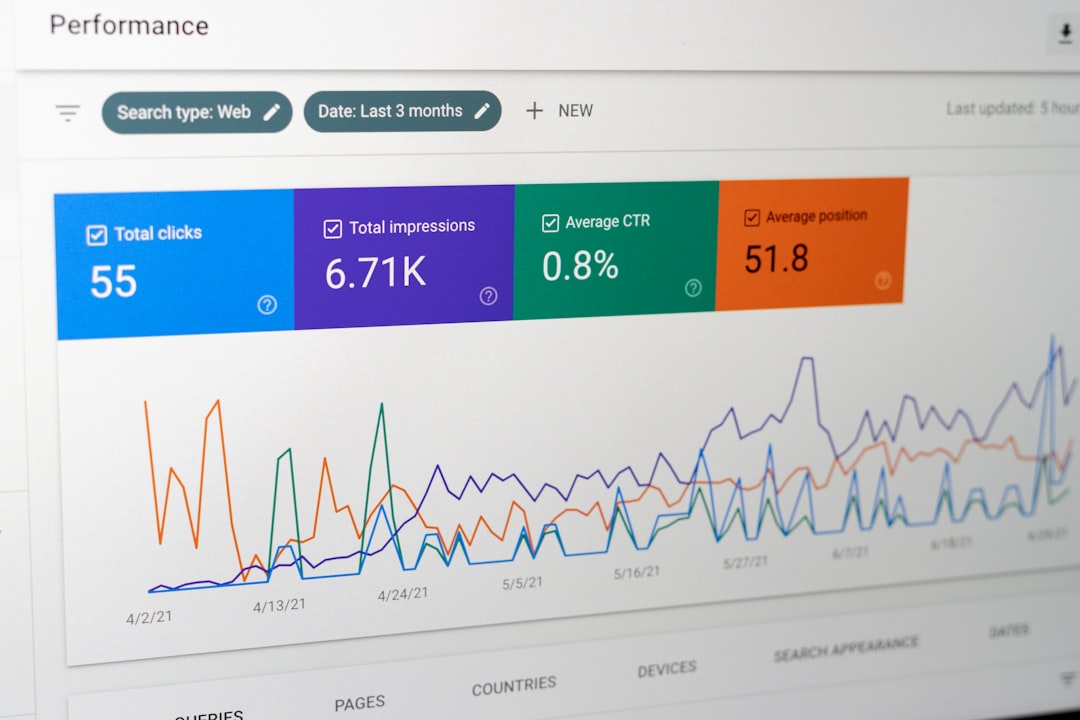
- Reporting gaps: Issue trackers usually report well on ticket status, but less effectively on pass rates, blocked tests, regression progress, or quality trends.
- Customization overhead: Maintaining workflows, fields, permissions, dashboards, and templates can become a project of its own.
- Mixed terminology: Bugs, tasks, stories, test cases, and executions may become difficult to distinguish in a crowded backlog.
In practice, teams may end up with a system that looks flexible but lacks testing discipline. The result is often inconsistent documentation, duplicated tests, unclear ownership, and reporting that requires manual interpretation.
What a Dedicated Test Management Platform Adds
A dedicated test management platform is designed around the realities of quality assurance. It supports a structured view of testing from planning through execution and reporting. Rather than forcing testing into a general ticket workflow, it provides purpose-built objects and relationships.
Typical capabilities include:
- Reusable test cases: Test cases can be organized by product area, feature, requirement, risk, or test type.
- Detailed test steps: Each step can include inputs, expected outcomes, attachments, and notes.
- Test suites and cycles: Teams can group tests for regression, smoke testing, release validation, acceptance testing, or specific builds.
- Execution tracking: Results such as passed, failed, blocked, or not run are tracked per cycle and environment.
- Traceability: Requirements can be linked to test cases, executions, and defects, creating a clear chain of evidence.
- Reporting: Dashboards can show coverage, defect density, pass rates, execution progress, and release readiness.
- Automation integration: Automated test results can be imported and correlated with manual testing activity.
- Audit support: Execution history, approvals, versioning, and evidence can support compliance and governance needs.
This does not mean a test management platform replaces an issue tracker. In most serious software environments, the two systems work together. The test platform manages the testing lifecycle, while the issue tracker manages defect resolution and engineering work.
Traceability and Compliance Considerations
Traceability is one of the strongest arguments for a dedicated test management platform. In industries such as healthcare, finance, aerospace, automotive, insurance, and government technology, teams may need to prove that requirements were tested and that defects were handled appropriately.
An issue tracker can show that a bug was fixed. However, it may not clearly show which requirement the bug affected, which tests detected it, which regression tests were repeated after the fix, who executed them, what evidence was captured, and whether the final result was approved.
A dedicated platform can establish relationships such as:
- Requirement to test case
- Test case to test execution
- Failed execution to defect
- Defect to fix version
- Fix to regression result
- Release to final quality report
For organizations subject to audits, this chain of evidence is not merely convenient. It can be essential. It reduces the reliance on spreadsheets, screenshots, and informal explanations when stakeholders ask whether a release is safe to ship.

Reporting: Ticket Status vs Quality Insight
Issue trackers are good at answering questions such as How many bugs are open?, Who is working on this task?, and What is the status of this sprint? These are valuable operational questions, but they are not the same as quality questions.
Quality leaders often need answers to broader questions:
- What percentage of regression testing is complete?
- Which critical requirements have no test coverage?
- Which areas of the product are generating the most failures?
- How stable is the current build compared with the previous release?
- What tests remain blocked, and what risk does that create?
- Are automated and manual results telling the same story?
A dedicated test management platform is generally better suited to answer these questions because its data model is based on testing concepts. It understands the difference between a test case, a test run, a test result, a defect, and a requirement. That distinction allows more accurate reporting and better decision-making.
Cost and Complexity
One reason teams stay with an issue tracker is cost. Adding another platform means licensing, configuration, training, integration, and administration. These concerns are legitimate. A tool that is too complex for the team’s maturity level can become shelfware.
However, the cost of not using a dedicated test management platform can also be significant. Teams may lose time recreating test plans, manually compiling reports, searching for execution history, or reconciling inconsistent records. Defects may escape because coverage is unclear. Releases may be delayed because stakeholders lack confidence in testing status.
The decision should not be based only on subscription price. It should consider the total operational cost of managing quality. If the team spends many hours maintaining spreadsheets, updating custom tracker fields, or creating manual release reports, a dedicated platform may quickly justify itself.
When an Issue Tracker May Be Enough
An issue tracker may be a reasonable test management solution when the testing process is lightweight and the risk profile is low. For example, it may be sufficient if:
- The team is small and communicates frequently.
- The product has limited functionality and few integrations.
- Testing is mostly exploratory or informal.
- There are no strict audit or compliance requirements.
- Release cycles are simple and infrequent.
- Stakeholders do not require detailed quality metrics.
In such cases, adding a dedicated platform may introduce more process than value. A well-configured issue tracker, supported by clear team discipline, may be adequate.
When a Dedicated Test Management Platform Is the Better Choice
A dedicated platform becomes increasingly valuable as the product, team, and risk profile grow. It is usually the stronger choice when:
- Regression testing is large, repeated, and business-critical.
- Multiple testers execute tests across different environments.
- Requirements must be mapped to tests and defects.
- Manual and automated testing need to be reported together.
- Release decisions depend on evidence-based quality metrics.
- The organization must satisfy regulatory, contractual, or internal audit standards.
- Testing knowledge must be preserved despite staff changes.
In these conditions, relying only on an issue tracker often creates avoidable risk. The organization may still fix bugs efficiently, but it may not understand its overall quality position with enough confidence.
Integration Is Often the Best Model
The most effective approach is rarely a binary choice. Many mature teams use both systems: a dedicated test management platform for test design and execution, and an issue tracker for defect handling and development workflow.
In this model, failed test executions can automatically create or link to defects in the issue tracker. Developers continue working in their familiar environment, while testers maintain structured test assets and execution records. Product owners and managers gain better visibility without forcing every quality activity into the backlog.
This separation of responsibilities can improve clarity. The issue tracker remains focused on work management, while the test management platform remains focused on quality validation. When integrated properly, the systems reinforce each other rather than duplicate effort.
Making the Decision
Before choosing an approach, organizations should assess their current and future needs. Useful questions include:
- How many test cases do we maintain, and how often are they reused?
- Do we need to demonstrate traceability from requirements to test results?
- How much time do we spend preparing test reports manually?
- Can we easily identify untested or high-risk areas before release?
- Do our current tools support both manual and automated testing visibility?
- Would a new team member understand our testing history from the existing records?
If the answers reveal gaps in visibility, repeatability, or accountability, a dedicated test management platform deserves serious consideration. If the process is simple, low-risk, and well controlled, an issue tracker may remain sufficient for the time being.
Conclusion
A dedicated test management platform and an issue tracker serve related but different purposes. The issue tracker is essential for managing defects and development work, while the test management platform is designed to manage the discipline of testing itself. Confusing the two can lead to short-term simplicity but long-term weakness in traceability, reporting, and release confidence.
For small teams with straightforward needs, an issue tracker can be practical and efficient. For organizations that require structured testing, reliable quality metrics, audit trails, and scalable processes, a dedicated test management platform offers clear advantages. The most trustworthy strategy is to evaluate the complexity and risk of the product honestly, then choose the tooling model that supports disciplined, evidence-based decisions about software quality.