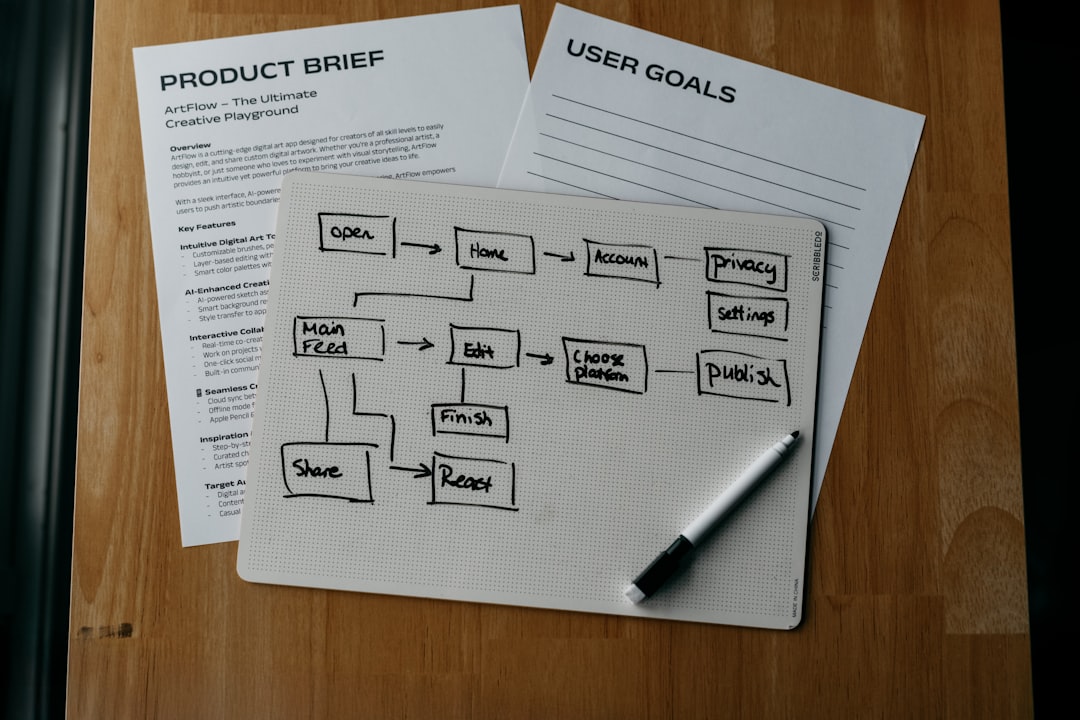
Automation platforms have become essential for teams that want to connect apps, move data, and reduce repetitive work without building everything from scratch. In that space, ActivePieces and n8n are two popular self-hostable workflow automation tools, often considered by startups, agencies, developers, and operations teams that want more control than typical closed SaaS platforms provide.
TLDR: ActivePieces is generally easier for non-technical users and teams that want a clean, approachable automation builder with strong open-source positioning. n8n is more mature, more flexible, and better suited for complex workflows, technical teams, and advanced integrations. Both can be self-hosted, but n8n has a deeper ecosystem while ActivePieces offers a simpler, more modern user experience. The best choice depends on whether the priority is ease of use or depth and flexibility.
Overview of ActivePieces and n8n
ActivePieces is a visual automation platform designed to help users build workflows by connecting triggers, actions, and logic blocks. It focuses on accessibility, making it easier for non-developers to create automations while still giving technical users enough flexibility to extend workflows. Its interface is clean, and its positioning strongly appeals to teams looking for an open-source alternative to tools like Zapier and Make.
n8n, pronounced “n-eight-n,” is a powerful workflow automation platform known for its flexibility and developer-friendly capabilities. It offers a node-based workflow editor, hundreds of integrations, custom JavaScript execution, API handling, branching logic, and advanced data transformation. While it can be used by non-technical users, it is especially popular among developers, technical operators, and automation specialists.

Ease of Use
When comparing usability, ActivePieces has an advantage for beginners. Its interface is simple, polished, and organized around the idea of quickly creating an automation. Users can choose a trigger, add actions, configure app connections, and test the workflow without feeling overwhelmed. For marketing teams, sales teams, customer support staff, and small business owners, this simplicity can be a major benefit.
n8n has a steeper learning curve. Its node-based canvas is flexible, but new users may need time to understand how data moves between nodes, how expressions work, and how to debug workflow outputs. However, this complexity is not necessarily a weakness. For users who need advanced control, n8n’s interface reveals more power over time.
In short, ActivePieces is easier to start with, while n8n is easier to grow into for complex technical automation.
Workflow Builder and Logic
Both tools allow users to create workflows based on triggers and actions. A trigger might be a new form submission, an incoming webhook, a new row in a spreadsheet, or a scheduled event. Actions might include sending an email, updating a CRM record, posting to Slack, or calling an external API.
ActivePieces uses a step-by-step style that feels familiar to users of mainstream no-code tools. Conditional logic, loops, webhooks, and integrations are available, but the overall experience remains guided. This makes it suitable for common business automations, such as lead routing, email notifications, database updates, and internal alerts.
n8n offers deeper workflow logic. It supports branching, merging, loops, error handling, custom functions, data manipulation, and complex API workflows. A user can visually build a workflow but still add code when needed. This combination of visual automation and technical extensibility makes n8n attractive for teams that need workflows beyond simple app-to-app connections.
Integrations and Ecosystem
Integration availability is one of the biggest differences between the two platforms. n8n has a larger and more mature library of integrations. It supports many popular services, including Google Workspace, Slack, Airtable, Notion, GitHub, HubSpot, PostgreSQL, MySQL, Stripe, Trello, Telegram, and many more. It also has a strong HTTP request node, making it possible to connect with almost any service that exposes an API.
ActivePieces also supports many common integrations and continues to expand its catalog. Its integration modules, often called pieces, are easy to use and designed for clarity. However, its ecosystem is generally smaller than n8n’s. For standard workflows, ActivePieces may provide everything a team needs. For niche services or highly specialized infrastructure, n8n is more likely to have existing support or the tools to build a custom solution quickly.

Open-Source and Licensing Considerations
The term open-source can be complicated in the automation market. ActivePieces has a strong open-source identity and is often favored by users who want community-driven software with transparent development. It appeals to organizations that want the confidence of self-hosting and the ability to inspect or modify the software.
n8n is self-hostable and source-available, but its licensing model has included restrictions that distinguish it from traditional permissive open-source licenses. This does not stop many companies from using it successfully, but legal and procurement teams may want to review the license carefully before adopting it for commercial or embedded use cases.
For most internal automation needs, both tools can be practical self-hosted options. However, when strict open-source licensing is a requirement, ActivePieces may be the more straightforward choice.
Self-Hosting and Deployment
Both platforms can be self-hosted, which is one of their biggest advantages compared with fully managed automation platforms. Self-hosting gives organizations more control over data, security, uptime, and infrastructure costs.
n8n has a mature self-hosting story. It can run through Docker, on cloud servers, Kubernetes, and various platform-as-a-service environments. It also supports queue mode and more advanced deployment configurations, which can be useful for larger teams or high-volume workflows.
ActivePieces is also designed for self-hosting and offers a relatively approachable setup. For smaller teams, its deployment can feel simpler and less intimidating. Organizations that want a clean automation platform without a large operational burden may find ActivePieces appealing.
The better choice depends on infrastructure maturity. n8n suits teams comfortable managing more advanced deployments, while ActivePieces may be better for teams that want a lighter self-hosted experience.
Customization and Developer Experience
n8n is especially strong for developers. It allows users to write custom JavaScript, build complex expressions, transform data deeply, and interact with APIs in flexible ways. Developers can create workflows that behave almost like lightweight backend services. This makes n8n useful for internal tools, data pipelines, system monitoring, DevOps automations, and custom business processes.
ActivePieces also supports extensibility, but its main strength is not raw technical complexity. It is designed to make automation accessible and repeatable. Developers can still benefit from it, especially when building workflows for non-technical teammates to maintain, but users looking for maximum scripting power may lean toward n8n.
AI Automation Capabilities
Modern automation increasingly involves AI, and both platforms have moved in that direction. ActivePieces has embraced AI-related use cases and often presents itself as a friendly platform for building AI-powered workflows. Users can connect large language models, process text, summarize content, classify messages, and automate responses.
n8n is also highly capable for AI automation. Its flexible HTTP nodes, code nodes, data handling, and integrations make it suitable for building AI agents, retrieval workflows, content pipelines, and internal AI tools. Technical teams may prefer n8n when they need to combine AI services with databases, webhooks, and custom logic.
Pricing and Total Cost
Both tools offer cloud-hosted options as well as self-hosting possibilities, though pricing can change over time. For many teams, the true cost is not just the subscription fee. It also includes hosting infrastructure, maintenance, workflow failures, debugging time, and employee training.
ActivePieces may reduce onboarding costs because it is easier for less technical users to understand. This can make it cost-effective for teams that want to empower business users to create their own automations.
n8n may require more initial learning, but it can save money for organizations that would otherwise need custom development. Its ability to replace scripts, internal tools, and complex integration services can provide strong long-term value.
Security and Governance
Security is an important consideration for any automation platform because these tools often handle API keys, customer data, emails, CRM records, and internal business information. Self-hosting either ActivePieces or n8n can help organizations keep sensitive data within their own infrastructure.
n8n offers features that can support more advanced operational needs, especially in larger deployments. Its maturity and documentation are useful for technical administrators. ActivePieces provides a simpler environment, which can reduce configuration complexity for smaller organizations.
In both cases, companies should manage secrets carefully, restrict access, monitor workflow activity, and ensure that automations follow internal data protection policies.
Best Use Cases for ActivePieces
- Small businesses that want a simple automation tool without heavy technical setup.
- Marketing and sales teams that need lead capture, notifications, CRM updates, and email workflows.
- Organizations prioritizing open-source clarity and self-hosting control.
- Teams with non-technical users who need to build and maintain workflows themselves.
- AI-assisted productivity workflows that do not require deep custom engineering.
Best Use Cases for n8n
- Technical teams that need complex workflow logic and data transformations.
- Developers who want to combine visual automation with custom code.
- Companies with many integrations across SaaS tools, databases, and internal APIs.
- Operations and DevOps teams building system alerts, data syncs, and internal processes.
- Advanced AI workflows involving APIs, databases, memory, branching, and custom logic.
Final Verdict
ActivePieces and n8n are both strong automation platforms, but they serve slightly different audiences. ActivePieces is the better fit when a team values simplicity, clean design, fast onboarding, and a more straightforward open-source experience. It helps users create automations without requiring deep technical knowledge.
n8n is the better fit when flexibility, integration depth, and technical power matter most. It can handle simple workflows, but its real strength appears in complex business systems, API-heavy automations, and developer-led internal processes.
For non-technical teams, ActivePieces may feel more natural. For technical teams, n8n is usually the stronger long-term platform. A practical decision often comes down to who will build the workflows, how complex those workflows will become, and how important licensing details are to the organization.
FAQ
Is ActivePieces easier to use than n8n?
Yes. ActivePieces is generally easier for beginners and non-technical users because its interface is simpler and more guided.
Is n8n more powerful than ActivePieces?
In most advanced scenarios, yes. n8n offers deeper customization, stronger data manipulation, more mature integrations, and better support for technical workflows.
Can both ActivePieces and n8n be self-hosted?
Yes. Both platforms support self-hosting, which gives organizations more control over data, infrastructure, and security.
Which tool is better for developers?
n8n is usually better for developers because it supports custom code, complex expressions, advanced API workflows, and flexible data transformation.
Which tool is better for small businesses?
ActivePieces may be better for small businesses that want simple automations and a shorter learning curve. However, n8n can be better if the business expects to build more complex workflows over time.
Are ActivePieces and n8n true open-source tools?
ActivePieces has a stronger traditional open-source positioning. n8n is self-hostable and source-available, but its license should be reviewed carefully by organizations with strict open-source requirements.
Which platform is better for AI workflows?
Both can support AI workflows. ActivePieces is easier for simpler AI automations, while n8n is stronger for advanced AI systems involving APIs, databases, branching logic, and custom code.