The safest expectation is that the MacBook Pro M6 will focus on faster AI work, better battery life, and steadier pro performance rather than a radical redesign. Apple’s current M4 Max MacBook Pro already reaches a 16-core CPU, 40-core GPU, and up to 128GB of unified memory, so the M6 has a high bar to clear [source: Apple]. The next big step will likely come from a smaller chip process, a stronger Neural Engine, and better graphics speed for creators, developers, and AI-heavy apps.
TLDR: The MacBook Pro M6 will likely bring a clear jump in AI processing, battery life, and graphics performance, but it may keep the same basic laptop shape. A video editor exporting a 20-minute 4K project could see render times drop by around 15% to 30% if Apple improves the GPU and media engine again. Developers may also see faster local AI model testing, with less heat and fewer fan bursts. The best reason to wait would be long-term performance, not a new design.
Expected M6 Performance Gains
The M6 chip is expected to build on Apple’s custom silicon plan: more speed per watt, tighter control over memory, and stronger task-specific engines. That means the MacBook Pro M6 may not just feel faster in benchmarks. It should feel quicker during normal work, too.
Common gains may include:
- Faster CPU cores for code builds, spreadsheets, and heavy multitasking.
- Improved GPU cores for 3D work, video effects, and game development.
- A stronger Neural Engine for Apple Intelligence and local AI tools.
- Better power control for longer battery life under pressure.
The catch is that many users may not notice a huge jump in email, browsing, or streaming. A MacBook Pro with M3 or M4 is already very fast for simple tasks. The M6 will matter most to people who push the machine daily.
AI Will Probably Be the Main Story
Apple is putting more focus on on-device AI. That makes the Neural Engine one of the most important parts of the M6. The chip may process more AI tasks locally, instead of sending work to cloud servers.
This could help with:
- Photo cleanup and smart edits
- Text summaries and writing tools
- Voice transcription
- Local coding assistants
- Private AI workflows for business users
Honestly, it feels like some AI features still make users wait a little too long. A 6-second pause for a summary or image edit can break the flow. If the M6 cuts that to 2 or 3 seconds, the laptop will feel much more useful, even if the change sounds small on paper.
Battery Life Could Improve Again
Battery life is one of the biggest reasons people buy Apple silicon MacBooks. The M6 may improve this again, especially if Apple moves to a more advanced manufacturing process. Reports around Apple’s future chips often point to newer 2nm-class production from TSMC, though timing can shift by product cycle [source: TSMC].
A smaller process can help a chip use less power while doing the same work. For a MacBook Pro, that could mean longer editing sessions, cooler laps, and fewer moments where the fan suddenly spins up during a video call. No one enjoys that tiny jet engine sound in a quiet room.

Graphics and Video Workflows
The M6 Pro and M6 Max will likely matter most to creative users. Apple may add more GPU cores, better ray tracing, and a faster media engine. That could help in Final Cut Pro, DaVinci Resolve, Blender, Logic Pro, and animation tools.
Expected creative gains may include:
- Shorter export times for 4K and 8K video.
- Smoother timelines with several effects active.
- Better external display support for studio setups.
- Faster 3D previews for design and motion work.
The media engine is especially worth watching. Apple has used dedicated hardware to speed up video formats such as ProRes. If the M6 improves that area, editors may see real savings every day.
Design, Display, and Ports
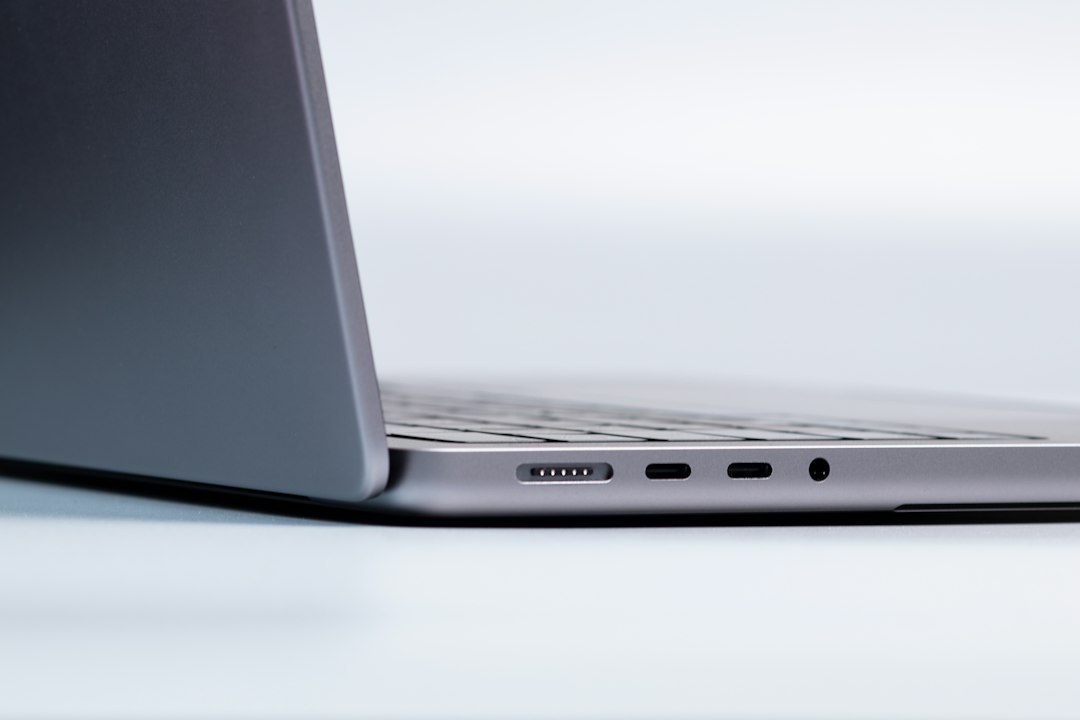
A major redesign is not guaranteed. The MacBook Pro already has a strong port setup, with MagSafe, HDMI, SD card support, and Thunderbolt. Apple may keep the same shell and focus on the inside.
Still, smaller upgrades are possible. The display could get brighter or more efficient. Wi-Fi and Bluetooth may improve. The webcam may get better image processing through the chip. A thinner body would be nice, but Apple usually protects cooling and battery life in the Pro line.
Possible Release Timing
Apple has not confirmed the M6 MacBook Pro. Based on past chip cycles, it may arrive after the M5 generation, possibly around 2026 or later. That depends on chip production, Mac demand, and Apple’s product schedule.
A buyer with an Intel Mac should not wait forever. The jump to M3 or M4 is already huge. A buyer with an M1 Pro or M2 Pro may have a better reason to wait, especially if current performance still feels fine.
Who Should Wait for the MacBook Pro M6?
The M6 will likely be best for users who keep laptops for five years or more. It may also suit people who work with large video files, AI tools, 3D scenes, or software builds. For students and light office users, an M4 or future M5 MacBook may be more than enough.
The simple answer: the MacBook Pro M6 should be a serious upgrade, but not a must-wait product for everyone. Its real value will depend on AI speed, battery gains, and how much faster the Pro and Max versions become.
FAQ
When will the MacBook Pro M6 be released?
Apple has not announced it. A release in 2026 or later seems possible, based on normal chip cycles.
Will the MacBook Pro M6 have a new design?
A full redesign is uncertain. Apple may keep the current design and upgrade the chip, display, and wireless features.
Will the M6 be much faster than M4?
It should be faster, especially in AI, graphics, and high-end workloads. Basic tasks may not feel very different.
Should an M1 Pro owner wait for M6?
Yes, if the laptop still runs well. The M6 could offer a more meaningful jump than a smaller year-to-year upgrade.
Will the MacBook Pro M6 be good for AI work?
Most likely, yes. Apple is expected to keep improving local AI performance through a stronger Neural Engine and better memory bandwidth.