Private equity ownership changes the rhythm of B2B growth. For lower-middle-market companies, the pressure is not simply to “get more leads,” but to identify the right opportunities faster, allocate sales resources intelligently, and build a repeatable revenue engine that can survive board scrutiny. B2B lead qualification becomes a value-creation discipline: part sales process, part data model, and part operational accountability system.
TLDR: PE-backed lower-middle-market companies need lead qualification systems that prioritize fit, urgency, budget, buying authority, and strategic value, not just form fills or meeting volume. For example, a portfolio company generating 1,000 monthly inbound leads may find that only 18% match its ideal customer profile, while 6% are truly sales-ready. By scoring leads consistently, sales teams can focus on accounts most likely to close, shorten sales cycles, and improve EBITDA impact through more efficient customer acquisition.
Why Lead Qualification Matters More After PE Investment
Lower-middle-market companies often grow through founder-led sales, personal networks, referrals, and strong niche reputations. That can work well up to a point. But after a private equity sponsor enters the picture, growth targets become more ambitious, reporting expectations rise, and the organization is usually expected to scale beyond informal processes.
In this environment, weak lead qualification creates expensive drag. Salespeople chase poor-fit prospects, marketing celebrates misleading lead volume, and leadership struggles to forecast accurately. For PE-backed companies, every commercial process should answer a simple question: does this activity increase enterprise value?
A mature qualification process improves enterprise value by helping the company:
- Increase sales productivity by focusing reps on high-probability accounts.
- Improve conversion rates from inquiry to opportunity and opportunity to closed-won.
- Shorten sales cycles by identifying urgency and buyer readiness earlier.
- Protect margins by avoiding customers that require heavy discounts or excessive support.
- Improve forecasting for management teams, sponsors, and lenders.
The Foundation: Define the Ideal Customer Profile
Before scoring leads, the company must define what a good lead actually looks like. This is where many lower-middle-market organizations struggle. They may have a CRM, a marketing automation platform, and a sales team, but no shared definition of an ideal customer.
The ideal customer profile, or ICP, should be based on the company’s best customers, not wishful thinking. Management should analyze accounts with the highest gross margin, strongest retention, fastest time to close, and greatest expansion potential.
Common ICP dimensions include:
- Industry: Which sectors have the strongest need for the product or service?
- Company size: Revenue, employee count, location count, production volume, or fleet size.
- Geography: Serviceable regions, logistics constraints, regulatory environments, or channel coverage.
- Operational trigger: Growth, compliance changes, facility expansion, technology replacement, or cost pressure.
- Customer economics: Expected contract value, margin profile, renewal likelihood, and support burden.
For example, a PE-backed industrial services company may learn that its strongest customers are manufacturers with $25 million to $150 million in revenue, multiple facilities, recurring maintenance needs, and a strong safety compliance requirement. A small one-time project from an unrelated industry may still generate revenue, but it should not receive the same sales priority.
Process: From Raw Lead to Qualified Opportunity
A practical lead qualification process should be simple enough for sales teams to use but structured enough for leadership to measure. The goal is not to create bureaucracy. The goal is to create commercial clarity.
A typical process includes five stages:
- Lead capture: Leads enter through website forms, trade shows, referrals, outbound campaigns, channel partners, or purchased lists.
- Data enrichment: The company appends missing information such as industry, company size, location, technology stack, parent company, and decision-maker roles.
- Initial fit screening: Marketing or sales development compares the lead against the ICP and eliminates obvious poor-fit accounts.
- Qualification conversation: A rep confirms business need, timing, budget, decision process, and next steps.
- Opportunity creation: Only leads meeting agreed criteria become opportunities in the CRM pipeline.
This distinction matters. A lead is a signal of possible interest. An opportunity is a commercially validated sales pursuit. When companies promote leads too quickly into pipeline, forecasts become inflated and sales reviews become less useful.
Core Qualification Criteria
Several frameworks exist, including BANT, MEDDIC, CHAMP, and GPCT. For lower-middle-market PE-backed companies, the best model is often a customized hybrid. It should be rigorous but not so complex that adoption fails.
The most useful qualification criteria are:
- Fit: Does the account match the ICP by industry, size, geography, complexity, and margin potential?
- Need: Is there a clear business problem the company can solve?
- Urgency: Is there a compelling reason to act now rather than later?
- Authority: Is the contact a decision-maker, influencer, technical evaluator, or information gatherer?
- Budget: Is funding available, planned, or realistically obtainable?
- Competition: Is there an incumbent vendor, internal solution, or active RFP process?
- Strategic value: Could this customer open a new vertical, become a reference account, or support expansion?
Strategic value is especially important in PE-backed settings. Not every valuable lead is the largest immediate deal. A mid-sized customer in a target vertical may help prove market expansion, support an add-on acquisition thesis, or strengthen positioning ahead of an exit.

Building a Lead Scoring Model
Lead scoring turns qualification criteria into a repeatable system. The score should combine firmographic fit, behavioral intent, and sales validation. A simple 100-point model often works well because it is easy to understand and manage.
Here is an example scoring structure:
- ICP fit: 40 points
- Target industry: 10 points
- Company size in preferred range: 10 points
- Serviceable geography: 8 points
- High-margin use case: 7 points
- Strong retention or expansion potential: 5 points
- Engagement and intent: 25 points
- Requested a consultation or quote: 10 points
- Visited pricing, service, or case study pages: 6 points
- Downloaded technical or buyer-focused content: 4 points
- Attended a webinar or trade event meeting: 3 points
- Opened multiple campaign emails: 2 points
- Qualification conversation: 35 points
- Confirmed business pain: 8 points
- Decision-maker involved: 8 points
- Budget identified: 7 points
- Purchase timeline within six months: 7 points
- Clear next step scheduled: 5 points
With this model, companies can create practical categories:
- 80 to 100: Sales-qualified lead, immediate account executive follow-up.
- 60 to 79: Marketing-qualified lead, sales development follow-up and nurture.
- 40 to 59: Nurture track, monitor additional intent signals.
- Below 40: Disqualify, suppress, or place in low-cost awareness campaigns.
The model should not be static. Leadership should review scoring performance monthly or quarterly. If high-scoring leads fail to convert, the criteria may be wrong. If low-scoring leads unexpectedly become strong customers, the model may be missing an important signal.
Governance: Making Qualification Stick
Even the best scoring model fails without governance. PE-backed companies should treat lead qualification as part of the operating cadence, not a one-time marketing project.
Key governance practices include:
- CRM discipline: Required fields for source, industry, company size, qualification status, next step, and disqualification reason.
- Service-level agreements: Clear rules for how quickly sales must follow up with qualified leads.
- Closed-loop feedback: Sales explains why leads convert or fail, and marketing adjusts targeting accordingly.
- Pipeline audits: Leadership reviews whether opportunities meet qualification standards before they affect forecasts.
- Board-ready reporting: Metrics connect marketing activity to qualified pipeline, revenue, CAC, and win rate.
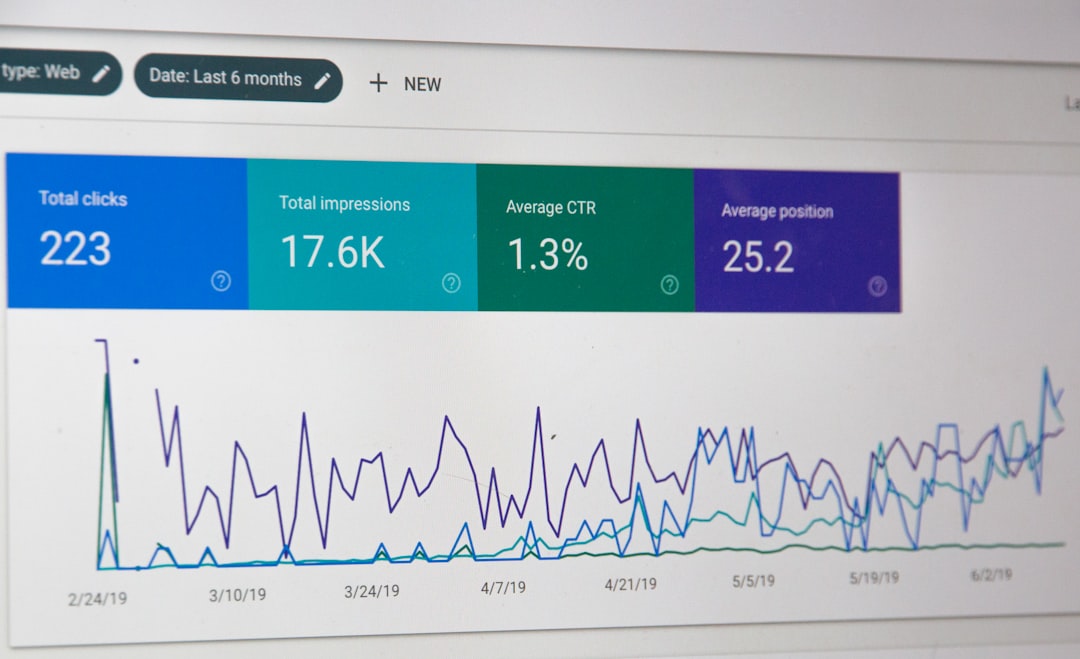
Useful metrics include lead-to-MQL conversion, MQL-to-SQL conversion, SQL-to-opportunity conversion, opportunity win rate, average contract value, sales cycle length, and customer acquisition cost. For example, if a company improves SQL-to-opportunity conversion from 35% to 50% while maintaining deal size, it can materially improve sales efficiency without increasing marketing spend.
Common Mistakes to Avoid
Many lower-middle-market companies overcomplicate lead qualification too early. Others rely entirely on sales intuition. Both approaches create problems. The most effective systems combine data, judgment, and continuous learning.
Avoid these common mistakes:
- Scoring activity instead of intent: A prospect who opens five emails is not necessarily ready to buy.
- Ignoring negative fit: Some leads should lose points for poor geography, low margin, or excessive customization needs.
- Letting every lead become pipeline: This inflates forecasts and wastes executive attention.
- Failing to segment by business unit: Different product lines may require different ICPs and scoring rules.
- Not tracking disqualification reasons: Lost and rejected leads contain valuable market intelligence.
The Payoff: Better Growth, Not Just More Leads
For PE-backed lower-middle-market companies, lead qualification is not merely a sales operations task. It is a growth lever. A company that knows which leads deserve attention can deploy sales capacity more effectively, produce cleaner forecasts, and build a more scalable go-to-market engine.
The objective is not to reject every imperfect lead. It is to understand the difference between interesting activity and valuable demand. When process, criteria, and scoring work together, the organization can pursue growth with greater confidence—and private equity sponsors can see a clearer path from commercial execution to enterprise value creation.